


To build a low-ticket digital product funnel with AI, give Claude your product and 1 prompt that names 3 skills: a checkout page copywriter, an ad copywriter and a funnel builder. Claude returns the checkout page copy, 10 Meta ad variations and a post-purchase welcome sequence in your brand voice, each in its own section for review.
If you’ve got a product idea sitting in a Google Doc because the thought of writing the sales page, the ads and the emails makes you want to lie down and take a nap, you’re in good company. That launch work is what kills most products before they make a single dollar, so this is how I hand it off.
I’ve been selling digital products since 2016, and this year I ran a launch that did $470,000 on under $10,000 in ad spend, with the webinar and every email written by this exact system. Everything I’ve learned along the way is built into the Claude skills in this article, and the result is launch copy that’s better than what I’d write if I sat down and did it by hand.
What goes into a low-ticket offer funnel?
A low-ticket offer funnel needs 3 pieces of copy: a checkout page that converts, ads that bring people to it and a welcome sequence for buyers.
The example I use is my AI for Parents Prompt Playbook, a low-ticket prompt library with 120 prompts across 8 categories, covering things like meal planning, birthday parties, travel, bedtime routines and the tricky behaviour conversations every parent dreads. Buyers get instant access to the playbook’s private page after checkout. I love using it as the example because it’s completely different from what I normally sell, so Claude can’t coast on copy it’s already seen from me.
What do you need set up in Claude before you start?
You need a brand book that captures your voice, offers and sales style, plus a skill for each piece of copy you want written.
The brand book is 1 document that captures how you sound, what you sell and how you sell it, and Claude reads it before it writes anything for you. The skills are the other half. A skill is a set of instructions you give Claude once, so it knows how to do a specific job well every single time without you explaining it again in every prompt.
Without a skill, you’d have to spell out what makes a great checkout page in every prompt, and you’d have to know that well enough to explain it. My skills have 15 years of marketing best practices built into them, and for this launch I used 3 of them:
- Checkout page copywriter, which knows what a high-converting checkout page needs.
- Ad copywriter, which knows how to test angles the way an ads strategist would.
- Funnel builder, which knows what a welcome sequence has to do after someone buys.
🎁 Want to see the full system behind this? I walk through the rest of my skills and exactly how I set them up in my free AI workshop. Grab the free AI workshop here.
What prompt writes the whole funnel at once?
1 combined prompt describes the product, attaches the product doc and asks for the 3 assets in separate sections, naming a skill for each.
Here’s the prompt:
Prompt
I just created a new low-ticket digital product called the AI for Parents Prompt Playbook. It’s a library of 120 prompts across 8 categories, priced at $[XX], and buyers get instant access to the playbook’s private page after checkout. The full product doc is attached.
Read the product doc, then do these 3 things in my brand voice:
1. Write the full checkout page copy using my checkout page copywriter skill.
2. Write 10 Meta ad variations using my ad copywriter skill, each with a different angle.
3. Write the post-purchase welcome sequence using my funnel builder skill.
Give me each one as its own section so I can review them separately.
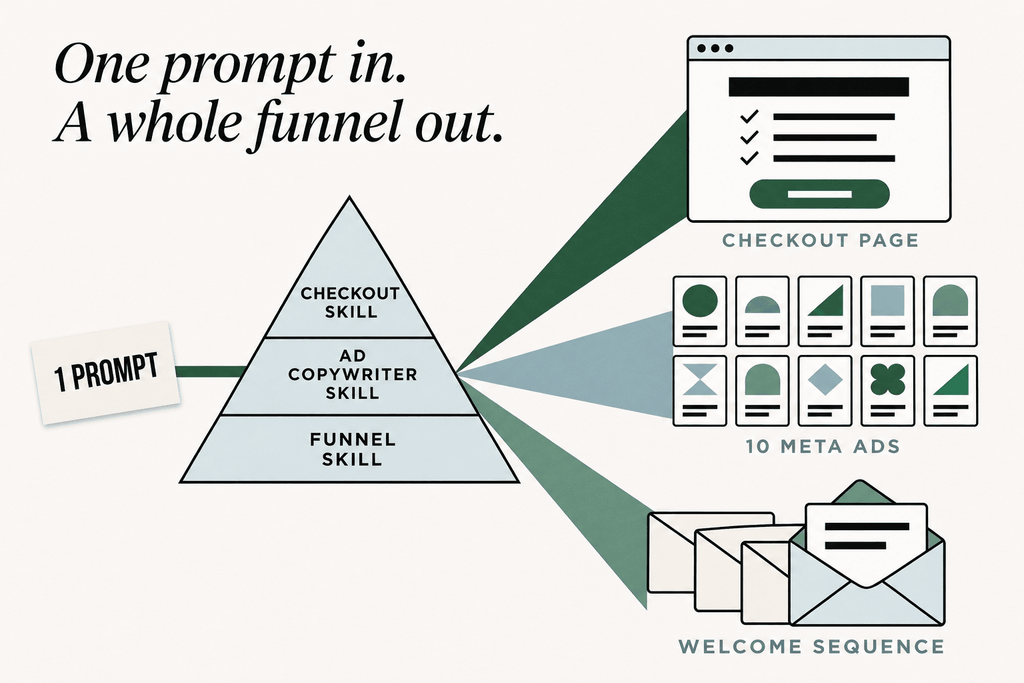
I keep this prompt short on purpose, and the only reason I can is the skills. I’m not telling Claude what makes a good checkout page or how to structure an ad, because the skills already know that, and naming each one tells Claude exactly which skill to pull in for each job. My job is to say what I want, and the skills’ job is to know how to do it well.
Two details make the prompt work smoothly: The price and delivery details are in the prompt on purpose, so the skills don’t stop to ask clarifying questions, and the product doc goes in as an attachment (a PDF of the product page works) rather than being pasted in. If a skill asks a question anyway, answer it in 1 line, because that’s the skill thinking the way a real copywriter would.
What should a low-ticket checkout page include?
A checkout page that converts includes a strong headline, outcome-focused bullets, an order summary, an order bump, an FAQ and a trust line by the button.
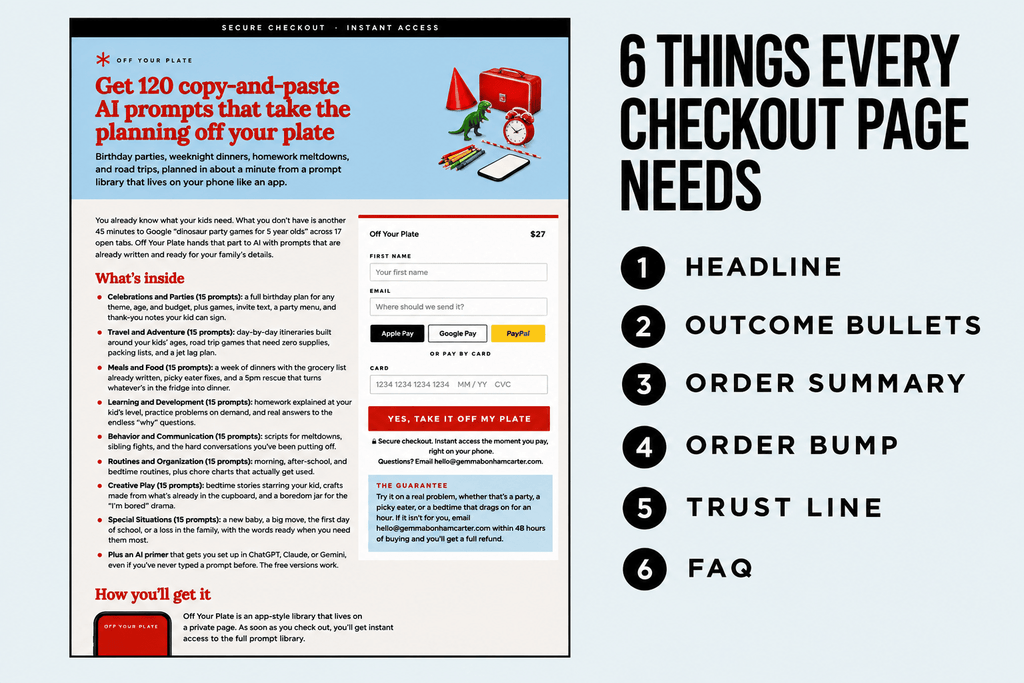
The checkout page is where the money changes hands, so I review it first. What I want you to notice is that the checkout page skill doesn’t write a nice paragraph about the product and call it done. It builds the page the way a checkout page needs to work, with the pieces people forget when they write one by hand, and those are the pieces that lift conversions.
Why should you write 10 Meta ad variations instead of 1?
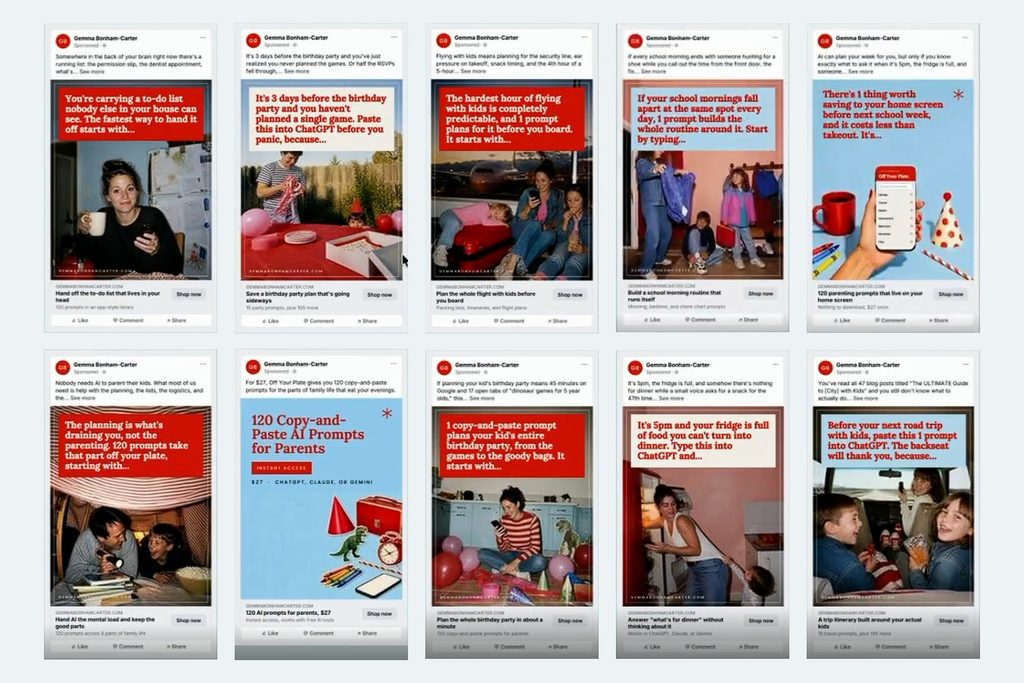
You never know which angle your audience will respond to until you test it, so running a single ad is really just a guess.
That’s why the prompt asks for 10 variations, each with a different angle. When the ads come back, the hooks should look very different from each other, because the ad skill is thinking like an ads strategist. You end up with 10 angles to test rather than 10 rewrites of the same sentence.
What does a post-purchase welcome sequence need to do?
A welcome sequence gets new buyers into the product fast, because a buyer who uses what they bought is far more likely to buy again.
This is the part almost everybody skips. The funnel builder skill writes a 1-email welcome sequence that goes out after purchase, starting with getting buyers into the product quickly. Later emails do jobs like asking for a quick win or introducing your next offer, and that’s what turns a $27 buyer into a future customer for your bigger offers. Most people never write this sequence at all.
Why does this work when AI sales copy usually sounds robotic?
It works because Claude starts from your brand book and from skills that already know what great launch copy looks like.
First up, you need to house your source of truth for your business. This is your brand guidelines and “business brain”, so Claude knows who you are, how you sound and how you sell before it writes a single word.
Then the skills come into play. In this example, each skill already knew what a great checkout page is, and what a great ad and a great welcome sequence look like.
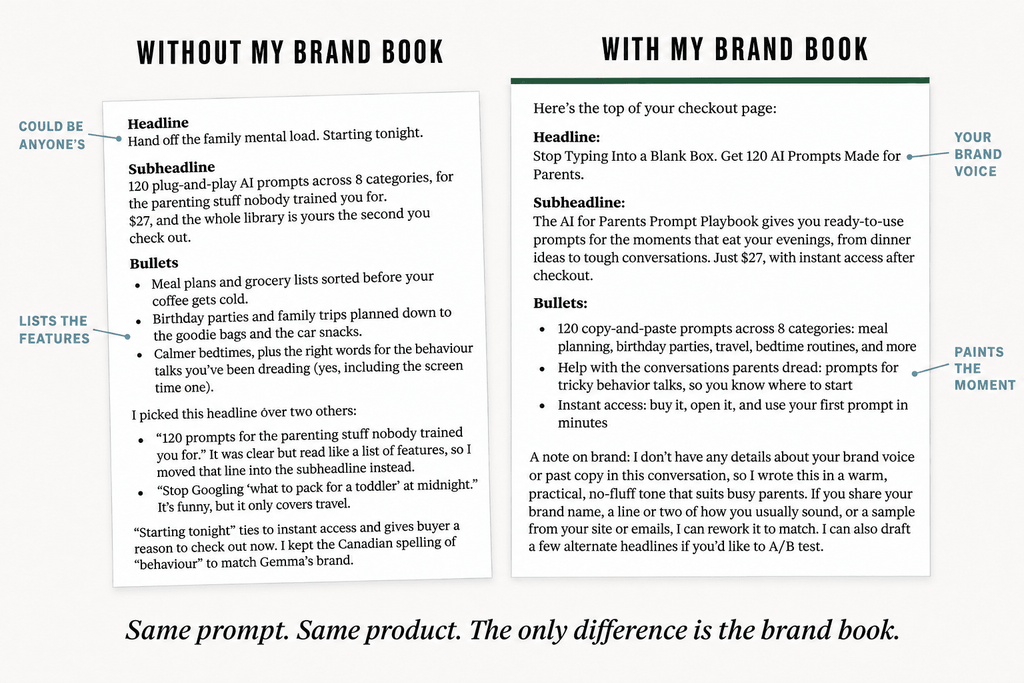
Put the already-trained skills and your business “source of truth” together and you don’t get a first draft you have to rewrite, you get work that’s better than what 99% of entrepreneurs are publishing.
Skills like these are exactly what I build and teach inside AI All Stars.
Frequently asked questions
Can I use this for a course or coaching offer instead of a digital product?
Yes. Swap your own product doc into the prompt, and the same 3 skills write the checkout page, ads and welcome sequence for it.
Should I paste my product details into the prompt or attach them?
Put the price and delivery details in the prompt so the skills don’t stop to ask, and attach the full product doc, such as a PDF of your product page.
What if a skill asks me a question before it writes?
Answer it in 1 line and let it keep going. It’s asking the same kind of question a good copywriter would.
How many ad variations should I ask for?
This workflow asks for 10, each with a different angle, so you have real options to test instead of a single guess.
Do I review all 3 assets at once?
Ask for each asset in its own section, then review them one at a time, starting with the checkout page.
Your next step
If your next product is waiting on launch copy, this is how you get it unstuck: 1 product doc, 1 short prompt and 3 skills that already know their jobs. The best place to see how all of my skills fit into your business is my free AI workshop.
Where to go next
- The Brand Book: The Missing Piece in Every AI Assistant: the source of truth Claude reads before it writes any of your launch copy.
- How to Train AI to Write in Your Brand Voice (So It Actually Sounds Like You): the fix for AI sales copy that sounds robotic.
- How to Write a Client Proposal With AI Using Your Discovery Call Transcript: the same skill-first approach, used to write a proposal that wins the client.
- How to Sell an Online Course (The Full Playbook): the bigger launch picture once your low-ticket offer is live.
Low-Ticket Offer Funnel: Write It With AI in 1 Prompt